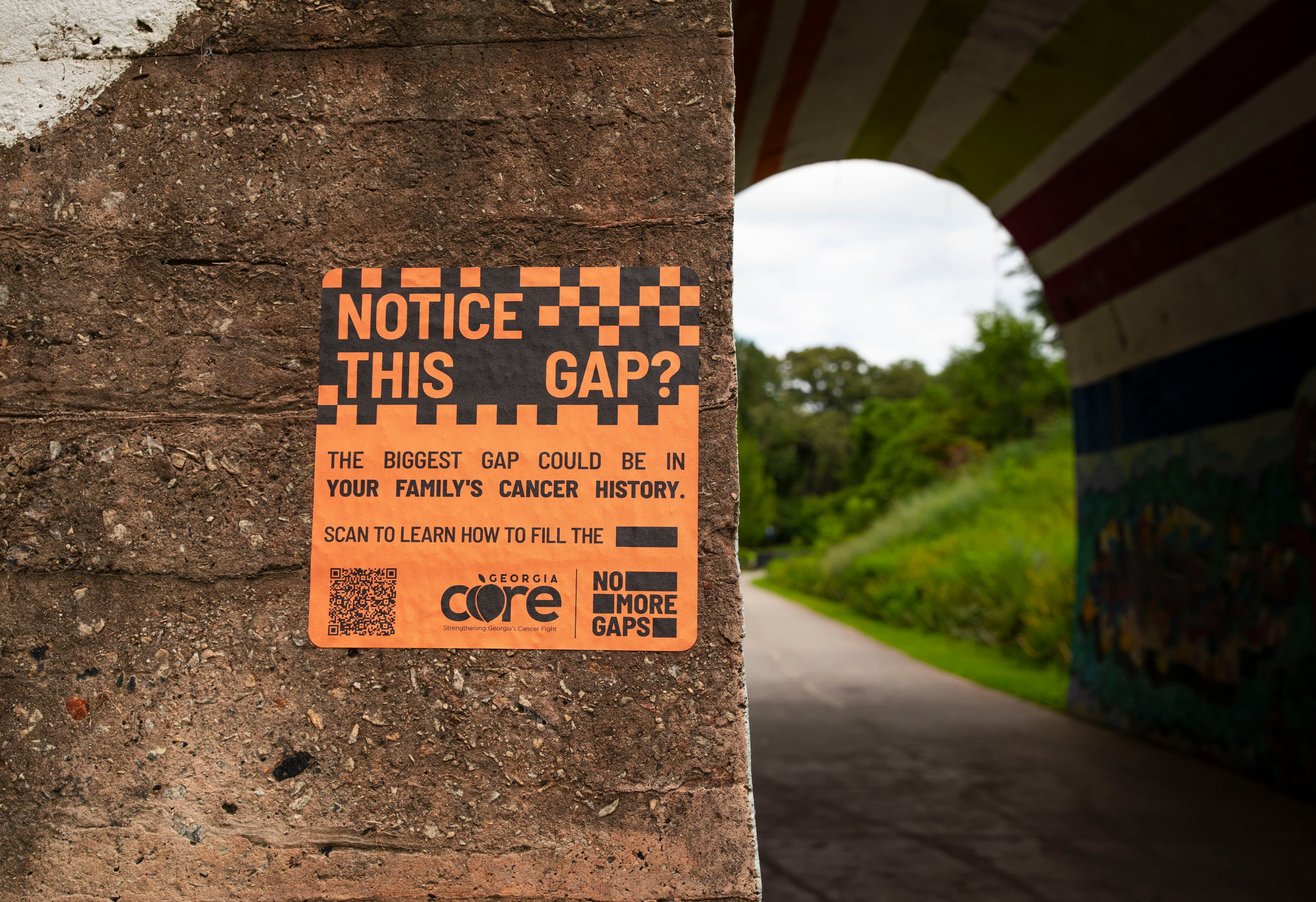


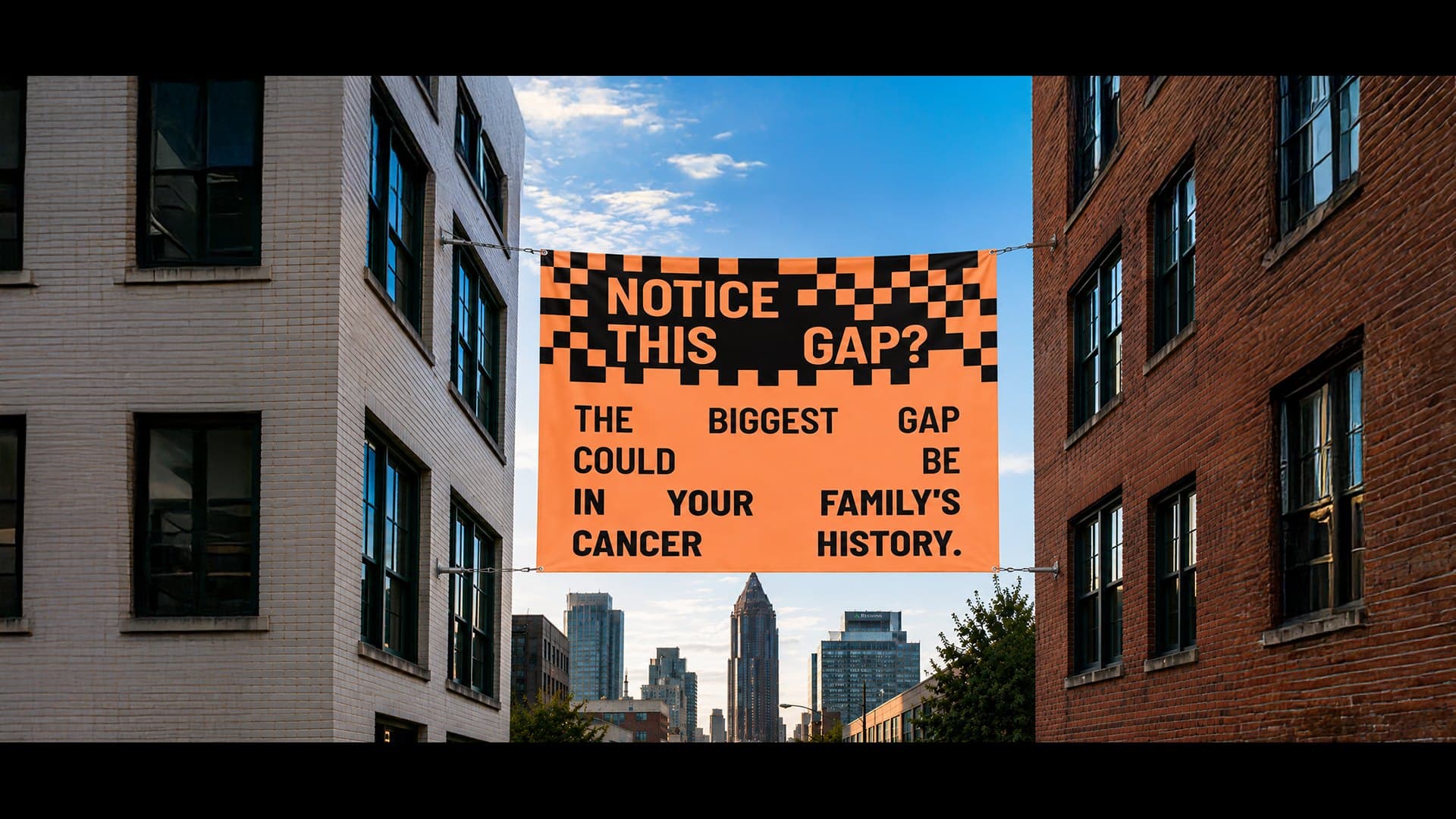
Gaps in family cancer history leave your future less certain.

Brought to you by

Georgia Core - Strengthening Georgia's Cancer Fight

Where are the gaps

Cancer disproportionately impacts Black communities, often due to later-stage diagnoses and lower engagement in preventative care. Yet one of the most powerful preventative tools remains largely untapped: knowing your family’s cancer history. Why? Because people simply don’t make time for these important conversations.

According to the CDC...

22.2%
feel completely confident filling out family cancer history on medical forms
Source
31.1%
know their family's cancer history very well
Source
70.0%
have discussed family cancer history with at least one biological relative
Source

Non-Hispanic Black and Hispanic people were less likely than non-Hispanic White people to talk with relatives about their family cancer history, consistent with previous research.

Survivor stories

  • Shondolyn Richburg

    Lithonia, GA

    Breast Cancer Survivor

  • Andrea Williams

    Avondale Estates, GA

    Lost her father to stage four colorectal cancer

  • Donnie Davis

    South Fulton, GA

    Colorectal Cancer Survivor

How to fill the gaps

  1. Ask your family
  2. Document your family history
  3. Talk to your doctor
  4. Schedule screenings or genetic counseling if necessary
No More Gaps campaign decal on a chair in an outdoor setting
No More Gaps campaign decal on a chair, second location
No More Gaps campaign decal on a chair, third location

Spread the word

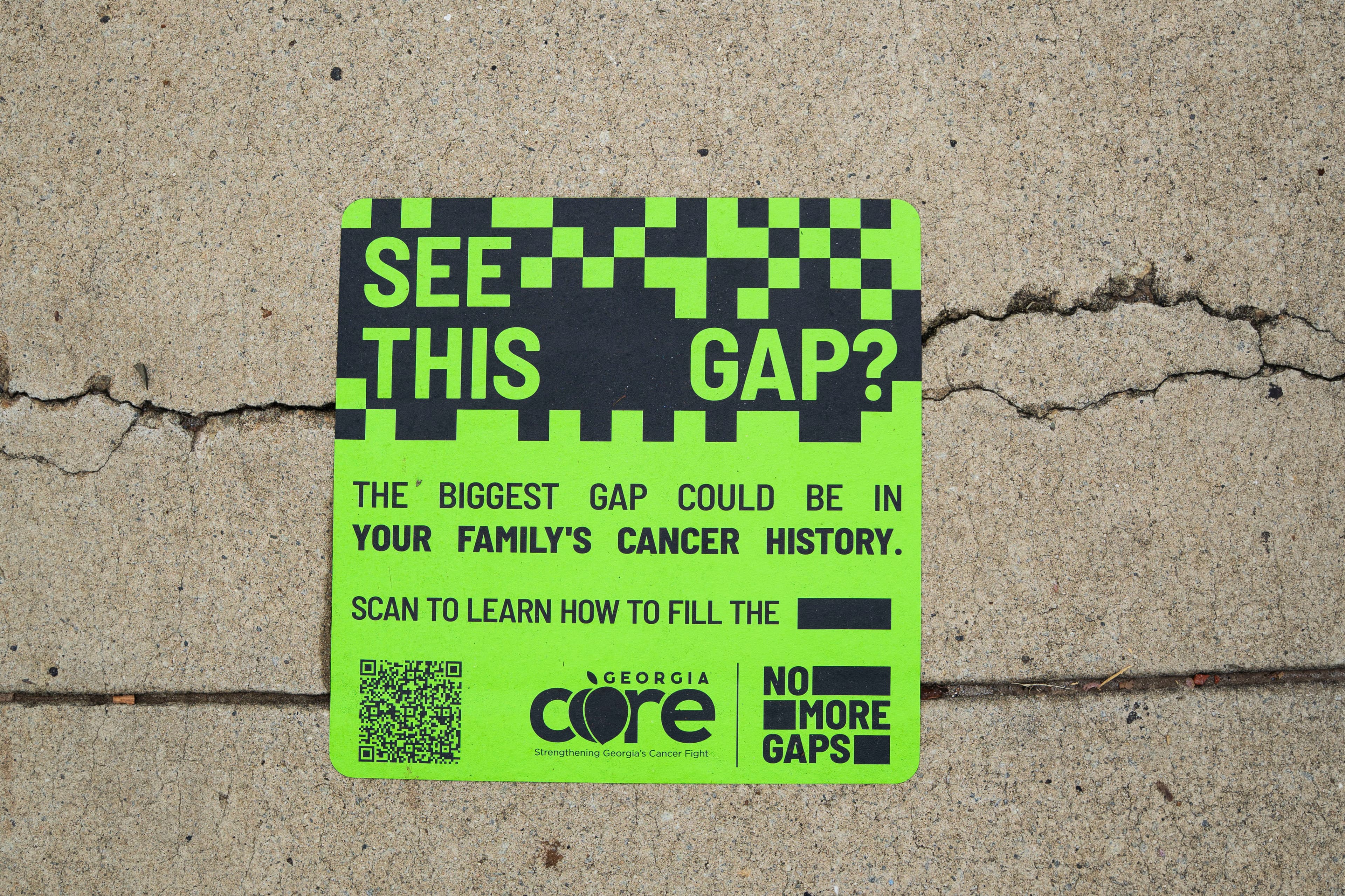
Across Georgia, our campaign is turning everyday gaps into reminders to fill the gaps in your family’s cancer history. When you spot one of our decals, take it as a sign to strike up an important conversation and find out what you might not know.